-
Official Websites of
-
MINISTRY OF
PLANTATION AND COMMODITIES -
No. 15, Level 5-13, Persiaran Perdana, Presint 2, 62654 Wilayah Persekutuan Putrajaya


ARKIB BERITA
- Details
- Hits: 441
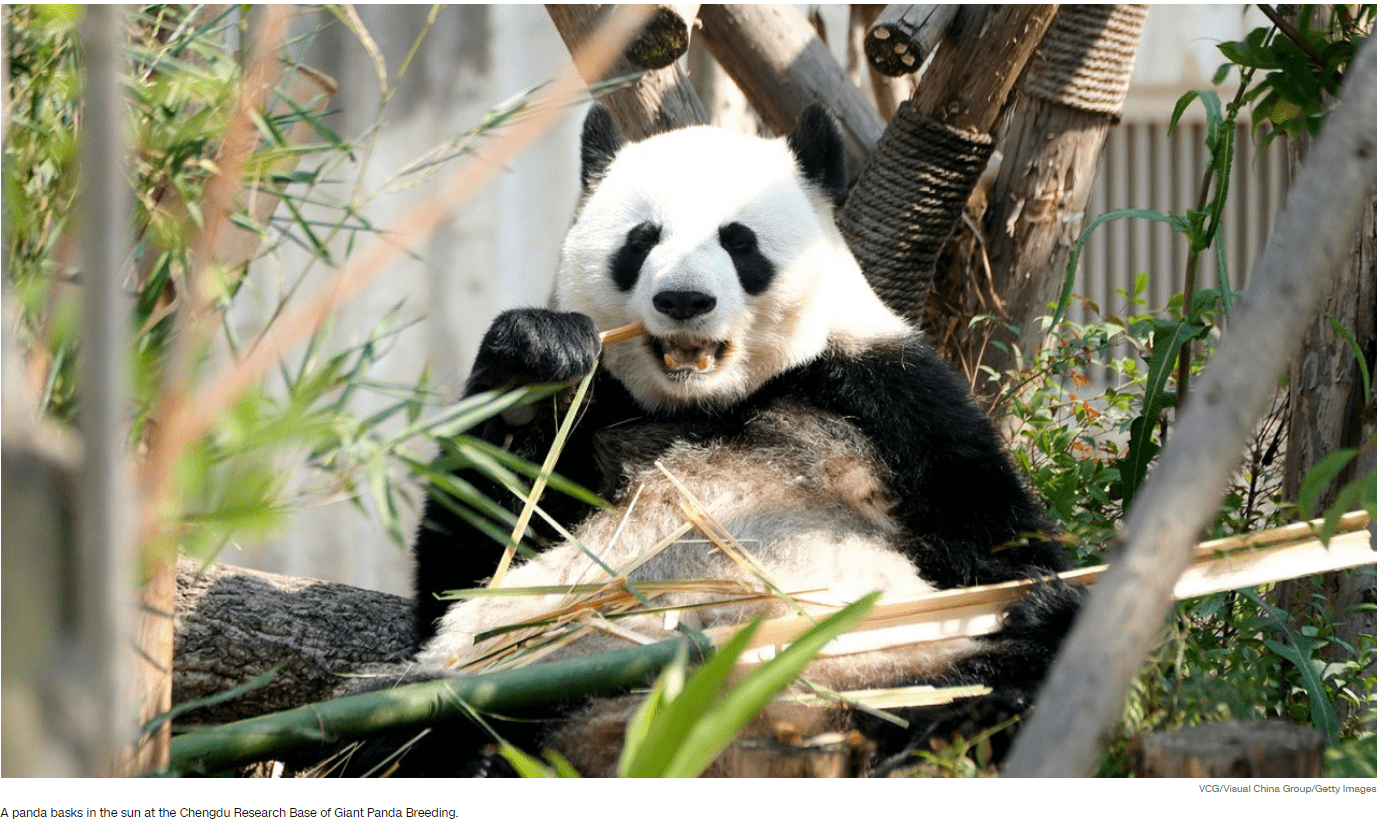
China has “panda diplomacy,” Australia parades koalas at global summits and now Malaysia plans to join the Asia-Pacific trend for adorable ambassadors – by gifting orangutans to countries that buy its palm oil.
But the idea has come under heavy criticism from conservationists, who note that palm oil has been one of the biggest factors behind the great apes’ dwindling numbers – with one leading conservation professor calling the plan “obscene.”
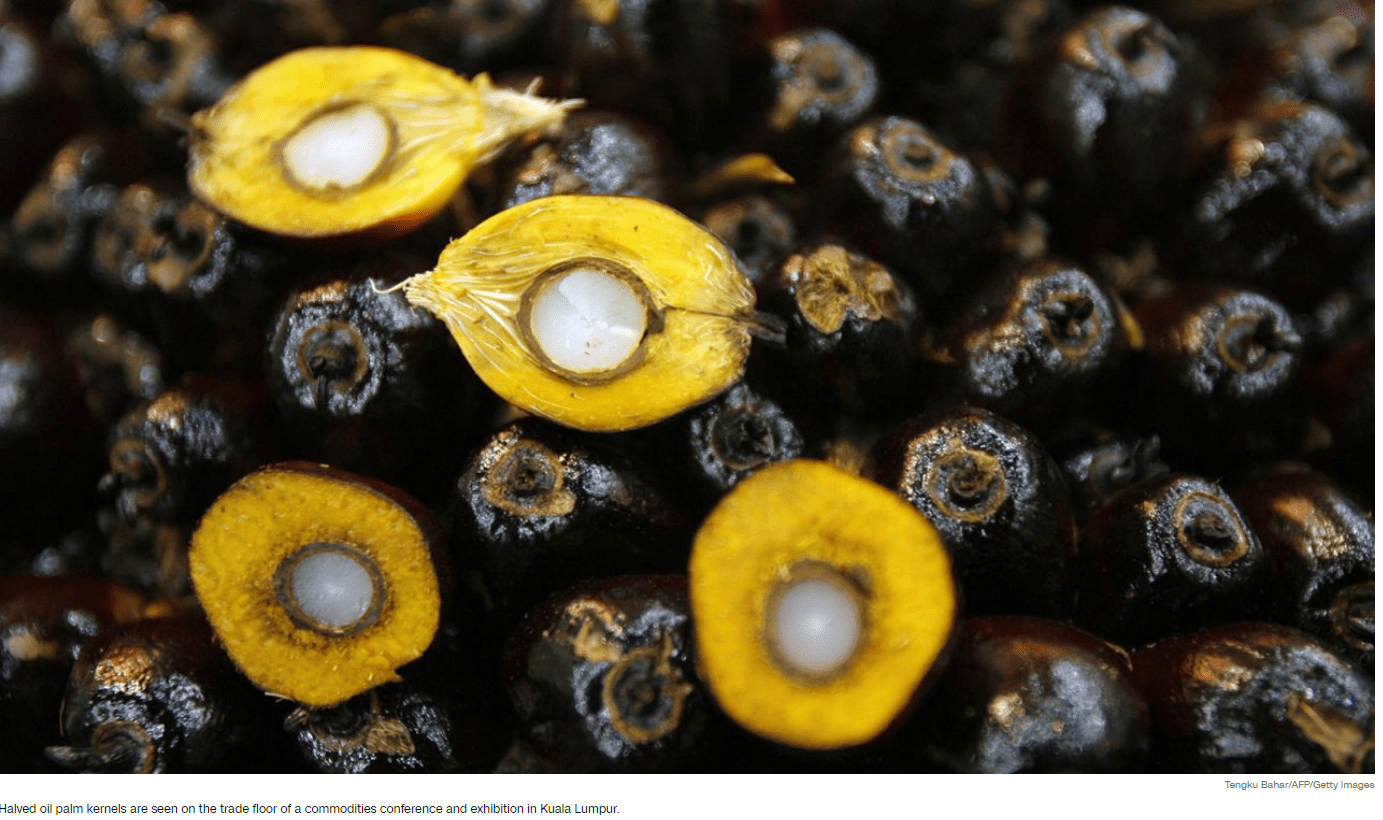
The world’s most widely consumed vegetable oil, palm oil is used in everything from shampoo and soaps to ice cream. Clearing land for palm oil plantations has been a major driver of deforestation, the greatest threat to the survival of critically endangered orangutans.
Malaysia is the world’s second-biggest exporter of palm oil after Indonesia.
Production is vital to the economy and government officials have gone to great lengths in recent years to defend and rebrand the industry by introducing initiatives to support sustainability – such as improving agricultural practices and issuing government-endorsed green certificates to companies that meet sustainability standards.
At a biodiversity summit outside the capital Kuala Lumpur on Wednesday, Malaysia’s minister for plantations and commodities announced plans for “orangutan diplomacy.” Hoping to emulate Chinese panda diplomacy – in which Beijing exerts soft power by loaning its beloved national animal to zoos overseas - the Malaysian government hopes to gift orangutans to some of its biggest trading partners, he said.
Those partners “are increasingly concerned over the impact of agricultural commodities on the climate,” said minister Johari Abdul Ghani. “It is a diplomatic strategy where it would be advantageous to trading partners and foreign relations, especially in major importing countries like the EU, India and China.”
Ghani did not provide further details such as a timeline or how the animals would be acquired – but welcomed palm oil giants to “collaborate” with local environmental groups in caring for the endangered giant apes.
“This will be a manifestation of how Malaysia conserves wildlife species and maintains the sustainability of our forests, especially in the palm oil plantation industry,” he said.
The announcement drew swift backlash from conservationists and environmental groups.
“It is obscene, repugnant and extraordinarily hypocritical to destroy rainforests where orangutans live, take them away and give them as gifts to curry favor with other nations,” Stuart Pimm, chair of conservation ecology at Duke University, told CNN. “It totally goes against how we should be protecting them and our planet.”
Pimm also noted that cuddly-animal charm offensives were normally followed by wider long-term conservation efforts.
“There is a huge difference between what Malaysia is proposing and what China has done for giant pandas,” he said. “China has state-of-the-art facilities for pandas and more importantly, has established protected areas that safeguard wild panda populations. What Malaysia’s government is proposing is hardly anything comparable.”
CNN has reached out to Ghani, and Malaysia’s Ministry of Plantation and Commodities, for further comment about the proposed orangutan program and how it plans to ensure that it will support conservation and sustainability.
‘A significant driver of deforestation’
Environmental and conservation groups also strongly opposed the idea, calling on Malaysian officials to instead work on reversing deforestation rates, which they largely blame on palm oil.
Between 2001 and 2019, the country lost more than 8 million hectares (19 million acres) of tree cover, according to a 2022 report by the World Wildlife Fund (WWF), an area nearly as large as South Carolina.
“Malaysia’s land surface area was once almost covered with forest,” the WWF said in its forestry report, which cited enduring threats such as palm oil cultivation and unsustainable logging.
According to a 2023 report by climate watchdog Rimba Watch, 2.3 million hectares of forests in Malaysia are at threat of deforestation. “Deforestation for palm oil in Malaysia has generally been on a downward trend but still represents a significant driver of deforestation,” Adam Farhan, the group’s director, told CNN. “We believe there is an urgent need to bring deforestation rates in Malaysia to zero rather than co-opt an endangered species as a commodity for diplomacy,” he added.
Heng Kiah Chun, a regional campaign strategist for Greenpeace Southeast Asia, said orangutan diplomacy “would not solve Malaysia’s deforestation crisis.” “If the Malaysian government is truly committed to biodiversity conservation, it should implement policies against deforestation instead,” Heng told CNN.
Conservation ‘crucial’
Orangutans are the largest tree-dwelling animals, known to spend most of their lives swinging through canopies of tropical rainforests.
Researchers have noted their incredible intelligence and ability to demonstrate skills such as instinctively treating wounds with medicinal herbs or using tree branches, sticks and stones as tools to break open hard objects like nuts.
The gentle apes, once found in greater numbers across Southeast Asia, have experienced sharp population declines, according to a WWF Malaysia report – particularly on Borneo, the large island shared between Malaysia, Indonesia and the tiny sultanate of Brunei.
“In 1973, Borneo was home to an estimated 288,500 orangutans. By 2012, their numbers had dropped by almost two-thirds, to 104,700 and the decline has continued,” the WWF report said.
There are still believed to be around 100,000 orangutans left on Borneo, and 14,000 on Indonesia’s Sumatra island, it added. “Orangutans are critically endangered,” WWF Malaysia told CNN in a statement. “Therefore it is crucial that all remaining orangutan habitats are conserved.”
A commitment to improving forest management and the sustainable production of palm oil would be “the best way to showcase Malaysia’s commitment to biodiversity conservation,” WWF Malaysia said.
“Orangutan conservation is best achieved by ensuring the protection and conservation of their natural habitats – and that no further forest conversion into palm oil plantations is allowed.”
https://amp.cnn.com/cnn/2024/05/12/climate/malaysia-orangutan-diplomacy-conservation-intl-hnk
Sumber : Cable Network News
- Details
- Hits: 492
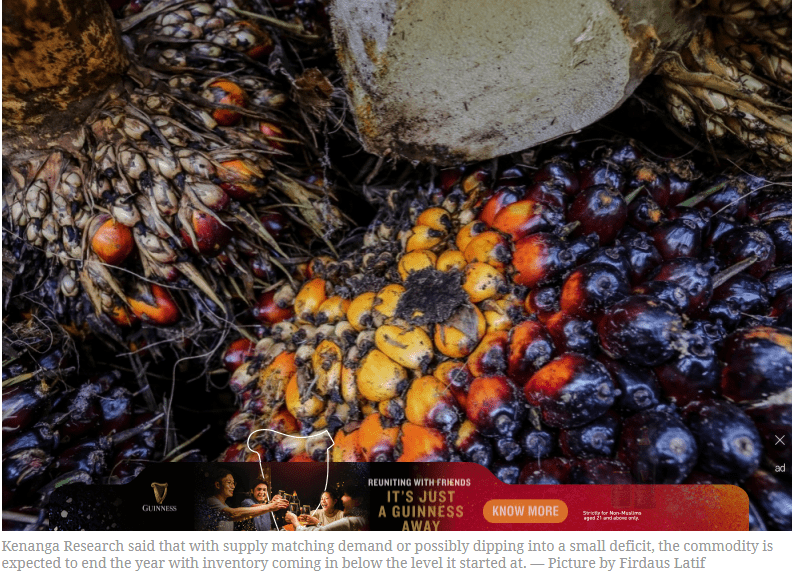
KUALA LUMPUR, Feb 14 ― Kenanga Research has forecast the price of crude palm oil (CPO) to trade range-bound and average around RM3,800 per tonne in a tight outlook for edible oils in 2024.
The research house said that with supply matching demand or possibly dipping into a small deficit, the commodity is expected to end the year with inventory coming in below the level it started at.
“The main issue is demand for edible oils which is underpinned mainly by population and income growth that is expected to continue growing at 3-4 per cent year-on-year (y-o-y), but supply is affected by tightening regulations, unpredictable weather and even geopolitical disruptions.
“Specifically for palm oil, Indonesia, the top producer and also user, looks set to manage exports till Hari Raya in April while India, a big palm oil importer, is likely to maintain generous levels of inventory pending an election in the first half of this year,” it said in a research note, maintaining a “neutral” call on the plantation sector.
RHB Investment Bank Bhd also maintained its neutral call on the plantation sector with the expectation of a higher CPO price environment in the first half of 2024.
The investment bank said it believes seasonally weaker output and the El Nino impact are anticipated to lower production in the months ahead.
“Although production is set to taper off in the coming months, export market demand may make a comeback in anticipation of the Aidilfitri festivities and restocking activities as stock levels should run down further. The anticipated stronger demand in the export market could lead to Malaysian palm oil stocks dropping below the two million tonne mark by next month, thus providing a boost to CPO prices,” it added.
Meanwhile, Public Investment Bank Bhd noted that despite the declining inventory trend, palm oil prices have remained range-bound in the last few months.
“Given the shorter working month in February, we expect inventories to fall below the psychological two million tonne level by end-February,” said the bank, which is also neutral on the plantation sector. ― Bernama
https://www.malaymail.com/news/money/2024/02/14/analysts-neutral-on-plantation-sector-with-crude-palm-oil-seen-averaging-rm3800-per-tonne/117962#google_vignette
Sumber : Malay Mail
- Details
- Hits: 556
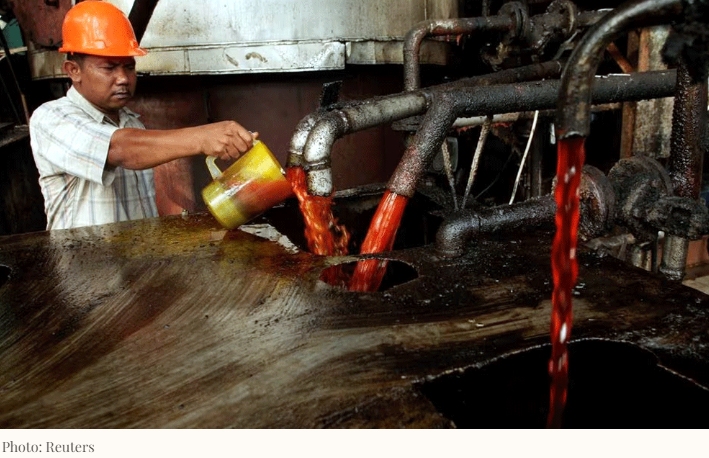
KUALA LUMPUR: BMI Country Risk & Industry Research (BMI), a product of Fitch Solutions Group Ltd, has made an upward revision to its forecast for the average price of Bursa Malaysia-listed third-month palm oil futures contracts in 2024 to RM3,750 per tonne from RM3,515 per tonne previously.
It said in a statement that in part, this reflects the subsequent persistence of price strength that started in the third quarter (3Q) of 2023, which saw contracts rose by 23.2 per cent between start-June and start-September.
At the same time, it said palm oil prices have more or less traded within five per cent of RM3,851 per tonne (+/- RM193 per tonne) since mid-2022.
Its revised forecast, however, does point to a softening of prices from its current levels through 2024, with palm contracts having traded at an average level of RM3,830 per tonne up to Feb 14, 2024.
"In the short term, we consider palm oil prices to be capped in light of price trends in the wider edible oils complex, expectations for large soya bean harvests in major producers and weak demand in China.
"Moreover, the impact of the El Niño event, now expected to dissipate between April and June 2024, on cultivation conditions in Indonesia and Malaysia is thought to be quite subdued," said BMI.
Meanwhile, the expected transition to La Niña conditions between June and August 2024 could weigh on market sentiment, testing price support.
BMI viewed that average palm oil prices would fall in 2025 relative to 2024, a reflection of a high base as well as the potential for a La Niña event to support oil palm cultivation, but at the same time have made an upward revision to its price forecast, now projecting that contracts would trade at an average level of RM3,500 per tonne.
However, it also reinforced the tail end of its price outlook in order to reflect a deceleration in the rate of palm oil export growth in Indonesia and Malaysia, which reflects the former’s commitment to higher domestic biodiesel blending mandates as well as a shift in oil palm production growth drivers in both markets.
"In our view, the world palm oil market will generate a production surplus of 2.0 million tonnes in the 2023/24 season, a three-season low.
"We forecast that this surplus will increase through the medium term, anticipating a surplus of 2.5 million tonnes in the 2024/25 season and season-on-season increases of 0.2-0.3 million tonnes thereafter," it said.
In terms of price, it maintained that average annual palm oil prices would decline through its forecast period, projecting mean prices of RM3,400 per tonne in 2026, RM3,300 per tonne in 2027 and RM3,205 per tonne in 2028.
Risk factors to its outlook include the development of biodiesel policies, the evolution of alternative edible oils’ prices and sustainable production efforts. – Bernama
https://www.thestar.com.my/business/business-news/2024/02/20/bmi-revises-2024-forecast-for-palm-oil-futures-contracts-to-rm3515-per-tonne
Sumber : The Star
- Details
- Hits: 315
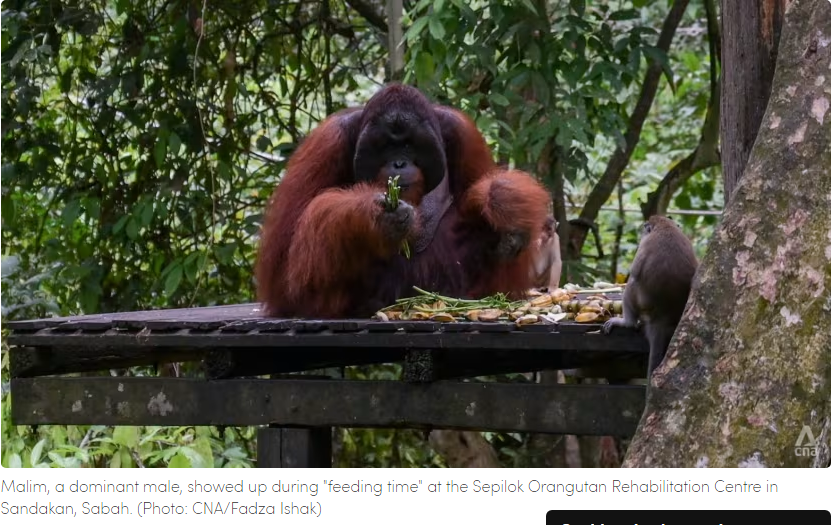
SANDAKAN: It is 3pm and feeding time at the Sepilok Orangutan Rehabilitation Centre in Sabah.
Malim, a majestic male orangutan with distinctive cheek pads, shuffles confidently onto the feeding platform, where bananas, sweet potatoes and vegetables like long beans have been laid out by the centre’s staff.
To the excitement of about 50 visitors watching from about 18m away, Malim starts tucking in, unperturbed by a group of macaques that are also helping themselves to the food.
A female orangutan and her baby soon join them.
Feeding takes place twice a day at Sepilok and is a highlight for many visitors to the centre, a popular tourist spot in Sabah.
Located at the fringe of the 4,294-hectare Kabili-Sepilok rainforest, the centre started in 1964 to rehabilitate orphaned, injured, and displaced orangutans and return them to the wild.
The forest is home to an estimated 150 to 200 orangutans while the centre, operated by the Sabah Wildlife Department, currently cares for 42 of the great apes.
There is no guarantee, however, that visitors will get to see orangutans at feeding time – and for the centre’s staff, that’s a positive sign.
The feeding platform is a gateway between the centre and the forest, and the staff provide a limited and monotonous spread for the orangutans to encourage them to forage independently in the wild.
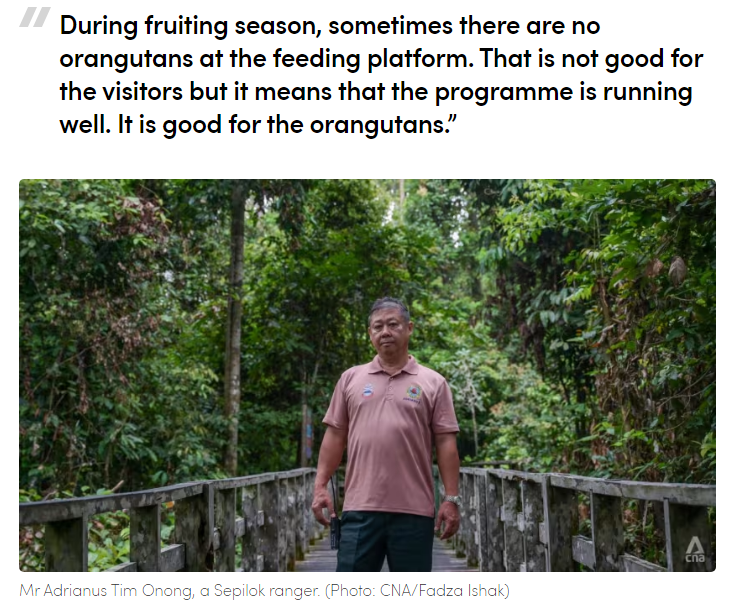
“The objective of this centre is for rehabilitated orangutans to be no longer dependent on us and to be free in the forest, where they can look for their own food,” said Mr Adrianus Tim Onong, a Sepilok officer.
The conservation and role of orangutans in Malaysia have come under the spotlight in recent months.
In May, plantation and commodities minister Johari Abdul Ghani said that the country should engage in “orangutan diplomacy” to counter bad press on palm oil and bolster relations with importers such as the European Union, India and China.
The European Union last year approved a ban on imports of commodities linked to deforestation, which could hurt the palm oil industry. Malaysia has criticised the law, calling it discriminatory.
Palm oil has been linked to the destruction of orangutan habitats, and Mr Johari said Malaysia – the world’s second-largest producer after Indonesia – cannot take a defensive approach.
Instead, it should show it is a sustainable palm oil producer committed to protecting forests and environmental sustainability, he said.
Inspired by China’s practice of sending pandas as diplomatic gifts to other countries, Mr Johari suggested giving orangutans to palm oil importers.
In 2023, the top importers of Malaysian palm oil were India (18.8 per cent), China (9.7 per cent), the European Union (7.1 per cent), Kenya (6.1 per cent) and Turkiye (5.8 per cent), according to the Malaysian Palm Oil Board.
The sector accounted for five per cent of the country’s gross domestic product in 2022.
But Mr Johari’s idea was quickly panned by conservationists as well as state officials in Sabah and Sarawak, the Malaysian states where wild orangutans are found.
https://www.channelnewsasia.com/asia/malaysia-orangutan-diplomacy-sabah-sepilok-palm-oil-conservation-endangered-apes-4453916
Sumber : Channel News Asia
- Details
- Hits: 308
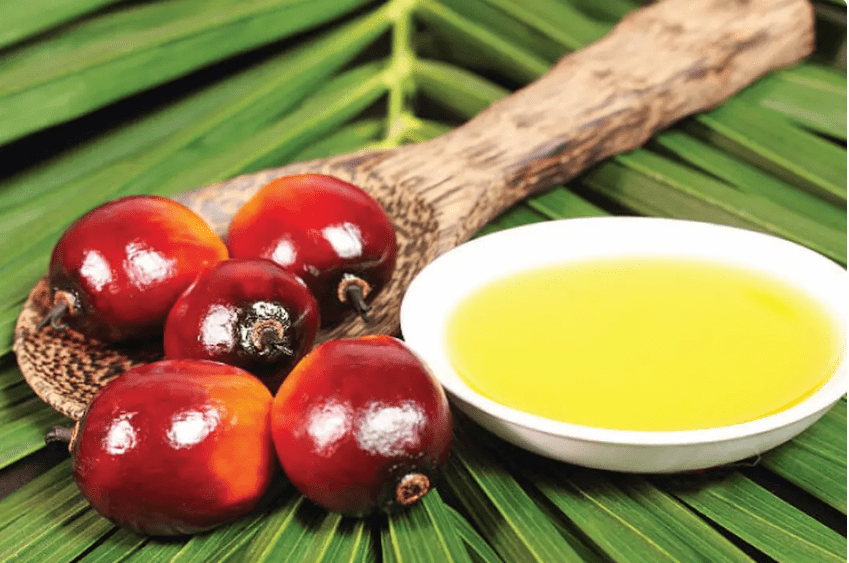
KUALA LUMPUR (April 15): The crude palm oil (CPO) futures contract on Bursa Malaysia Derivatives closed weaker on Monday due to concerns over the rising output of the commodity, coupled with weaker demand.
Palm oil trader David Ng said the expectation of lower demand post-festivity weighed on sentiment despite the Malaysian Palm Oil Board (MPOB) reporting lower stock levels last month.
“Hence, we see support at RM4,150 a tonne and resistance at RM4,300,” he told Bernama.
According to the MPOB, Malaysia’s total palm oil stocks dropped 10.68% to 1.71 million tonnes in March 2024 from 1.92 million tonnes in February 2024.
At the close, the spot month April 2024 contract slid RM93 to RM4,405 a tonne, May 2024 shed RM94 to RM4,277 and June 2024 lost RM78 to RM4,204.
The July 2024 note narrowed by RM69 to RM4,141 a tonne while August 2024 was lower by RM65 to RM4,074 and September 2024 dropped RM61 to RM4,021 a tonne.
Total volume increased to 90,982 lots from Friday’s 66,678 lots, while open interest was lower at 272,031 contracts from 267,644 contracts previously.
The physical CPO price for April South slipped RM50 to RM4,460 a tonne.
https://theedgemalaysia.com/node/708007
Sumber : The Edge Malaysia