-
Official Websites of
-
MINISTRY OF
PLANTATION AND COMMODITIES -
No. 15, Level 5-13, Persiaran Perdana, Presint 2, 62654 Wilayah Persekutuan Putrajaya


BERITA SAWIT 2024
- Details
- Hits: 2075
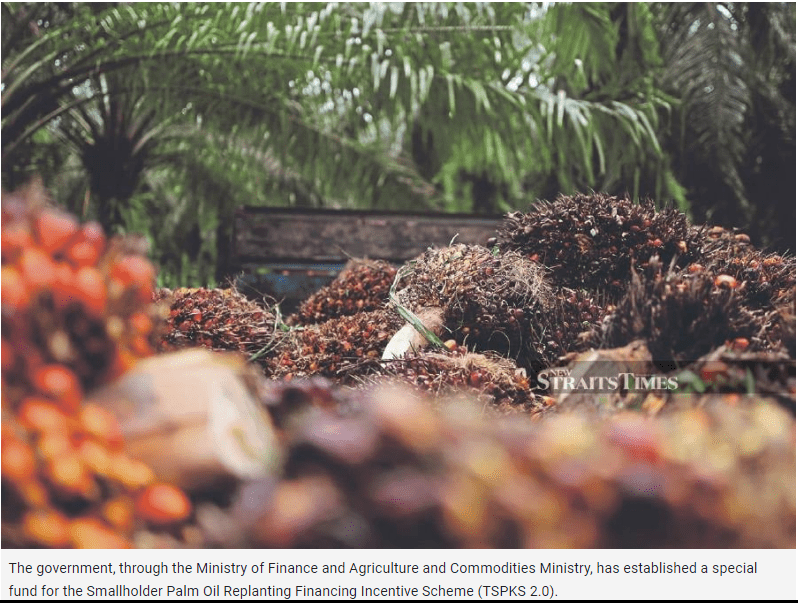
BANGI: The government, through the Ministry of Finance and Agriculture and Commodities Ministry, has established a special fund for the Smallholder Palm Oil Replanting Financing Incentive Scheme (TSPKS 2.0).
Plantations and Commodities Minister Datuk Seri Johari Abdul Ghani said the scheme, which involves an allocation of RM100 million, will be fully distributed by Agrobank for the replanting of oil palm, specifically benefiting palm oil entrepreneurs and individual smallholders.
Applications are open starting from Jan 15 and the forms can be obtained from any nearby Tunas/Agrobank office in the smallholder's area.
"The provided funds consist of a grant component (50 per cent) and another part is financing (50 per cent) for individual smallholders.
"The disbursement of funds for both the grant and financing components will be entirely handled by Agrobank.
"However, the repayment by applicants will only involve 50 per cent (including two per cent interest) of the total disbursed amount.
"This initiative aims to benefit private small oil palm planters with a total land area of 5900 hectares," he said at a press conference during the Malaysian Palm Oil Board's Excellence Awards 2023 in Bangi today.
According to Johari, the financing amount is RM14,000 per hectare for small oil palm planters in Peninsular Malaysia, and RM18,000 per hectare for small oil palm planters in Sabah and Sarawak.
The financing is in a combination of grants and funding for the following activities, namely the preparation of planting areas, purchase of high-quality oil palm seedlings, and the maintenance of the plantation until the oil palms reach three years of age (36 months) after planting.
On that note, Johari said the government is committed to ensuring the long-term economic viability of the palm oil industry.
He added that his ministry's main focus has been to engage with all stakeholders in this sector to identify and address specific issues affecting the country's palm oil performance.
"Besides labour, a primary focus for industry players, issues such as plantation management, palm replanting, and timely fruit harvesting are emphasised.
"Research and development (R&D) efforts have the potential to enhance the overall productivity of the palm oil industry.
"Furthermore, mechanisation and automation can improve labour efficiency and overall productivity," he noted.
Johari also highlighted that the global demand for palm oil is expected to increase with the growing world population.
He said considering limited resources, Malaysia, as the world's second-largest palm oil producer, must seize this opportunity by enhancing productivity and production.
"The global food security issue urges countries like Malaysia to boost productivity in agricommodity production to meet the rising demand," he said.
https://www.nst.com.my/business/corporate/2024/01/1004953/malaysia-sets-rm100mil-fund-smallholders-replant-palm-oil
Sumber : New Straits Times
- Details
- Hits: 349

KUALA LUMPUR: The plantation and commodities ministry and the Council of Palm Oil Producing Countries (CPOPC) plan to further strengthen the collaboration between Malaysia and Indonesia for the benefit of the palm oil industry in both countries.
Following a visit from the CPOPC today, plantation and commodities minister Johari Ghani said the matters discussed included disseminating information to the world on the high standards in palm oil production in Malaysia and Indonesia.
“Palm oil production is vital to Malaysia’s economy, and we are the second-largest producer globally after Indonesia,” he said in a post on X.
Johari said the CPOPC’s efforts were among the strategies to promote Malaysia’s palm oil industry and make the commodity the global vegetable oil of choice.
“This is also to ensure that the global community is aware of the benefits of palm oil,” he said.
On Monday, Egyptian ambassador Ragai Tawfik Said Nasr visited Johari to discuss making Egypt a gateway to expand Malaysia’s palm oil exports to Africa through the Suez Canal Economic Zone.
The minister said the governments of both countries were exploring a partnership in marketing palm products, with the involvement of private players.
https://www.freemalaysiatoday.com/category/nation/2024/02/08/malaysia-indonesia-to-strengthen-cooperation-in-oil-palm-industry/
Sumber : Free Malaysia Today
- Details
- Hits: 286
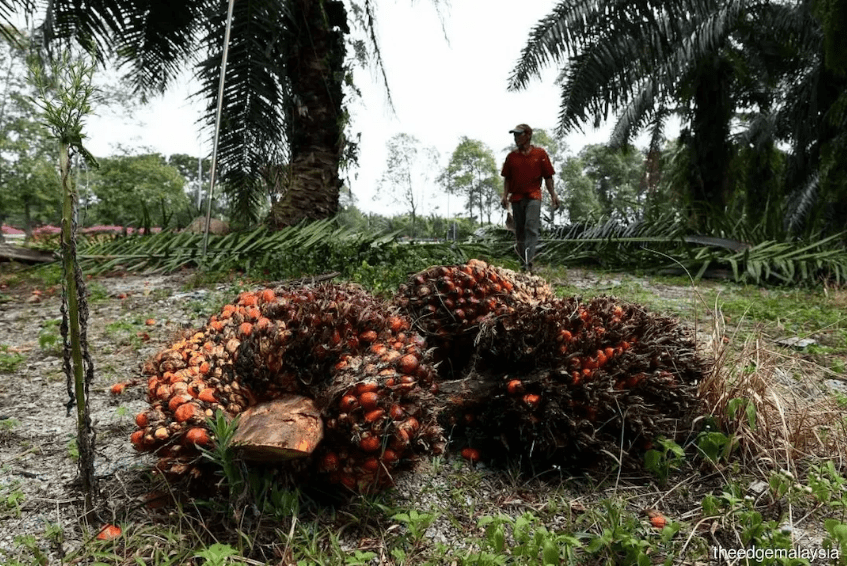
KUALA LUMPUR (June 11): Malaysia’s stockpile of palm oil may continue to swell in the coming months on seasonal strength in production and weigh on prices, analysts cautioned.
At least seven research houses maintained their neutral view on the plantation sector following the release of palm oil stocks data by the Malaysian Palm Oil Board (MPOB) that showed a 0.5% month-on-month expansion in inventory for May.
Output will likely peak at the end of June or by the third quarter, supported by improving weather conditions and productivity, BIMB Securities said. Demand could be subdued as palm oil is still trading at a small discount against more expensive substitute soybean oil, the research house said.
Prices of the edible oil used in everything from lipstick to diesel have climbed about 5% so far this year as poor weather conditions in key producing nations Malaysia and Indonesia stoked concerns over output and potential tightening in supply.
The benchmark palm oil contract for August delivery was trading at around RM3,887 per tonne on Bursa Malaysia Derivatives on Tuesday. However, prices are down 12% from a high of RM4,407 per tonne on April 3.
Further, strong shipments in May are at risk from Indonesia's move to cut palm oil-related tariffs in June, which will reduce the export tax to US$18 (RM84.99) per tonne and the levy to US$75 per tonne. All in all, the move could lower export costs by US$49 per tonne compared to the previous month.
Malaysia is losing competitiveness in palm oil exports, TA Securities warned. If production stays at its current robust pace, it would lead to burgeoning palm oil stockpiles and potentially limit the upside, the research house said.
TA Securities would also review its current forecast for crude palm oil to average RM4,000 per tonne in 2024 if South America's soybean supply turns out to be lower than expected, demand recovers more meaningfully, and production costs fall significantly.
MPOB data released on Monday showed palm oil inventory totalling 1.75 million tonnes in May in the world’s largest palm oil producing nation after Indonesia, as higher exports and domestic consumption were more than offset by higher output.
Production surged 13.5% from April to 1.70 million tonnes in May, the biggest in six months. Exports, meanwhile, rose to a six-month high of 1.38 million tonnes, up 11.66% from April, the MPOB said.
For strategy, MIDF Amanah Investment Bank said now is the best time for investors to lock in profits for its top picks, such as Ta Ann Holdings Bhd (KL:TAANN) and IOI Corp Bhd (KL:IOICORP), "as we anticipate the increase in share price will gradually decline towards the end of the quarter”.
TA Securities, BIMB, and MIDF have a ‘neutral’ outlook on the sector.
https://theedgemalaysia.com/node/715012
Sumber : The Edge Malaysia
- Details
- Hits: 475

KUALA LUMPUR/MUMBAI: Malaysia's palm oil stocks at the end of March dropped to their lowest in 10 months as a jump in exports offset a rebound in production, the industry regulator said on Monday.
The reduction in stocks in Malaysia, the world's second-largest palm oil producer after Indonesia, would help in supporting benchmark futures, which rose to a one-year high earlier this month.
Malaysia's palm oil stocks at the end of March fell 10.68% from the previous month to 1.71 million metric tons, their lowest since May, data from the industry regulator the Malaysian Palm Oil Board (MPOB) showed.
Crude palm oil (CPO) production gained 10.57% from February to 1.39 million tons, while palm oil exports ticked up 28.61% to 1.32 million tons, the MPOB said.
A Reuters survey forecast March inventories at 1.79 million tons, a 6.65% decline from the previous month, with output at 1.38 million tons and exports at 1.23 million tons.
The MPOB report is bullish for the market, Anilkumar Bagani, research head of vegetable oils broker Sunvin Group said.
"The CPO stocks are depleting fast, and they could fall further by end of April. Malaysian output could drop in the first half of April because of Ramadan holidays, while exports during the period were higher than the last month," he said.
The CPO stocks at the end of March fell to 797,974 tons, the lowest since March 2022, the MPOB data showed.
As soybean oil exports from South America are set to increase in the coming months, palm oil exports could come under pressure, a New Delhi-based trader said.
This is because soybean oil is trading at a discount to palm oil, which will cap palm oil prices despite falling stocks, the trader said.
Palm oil is affected by price movements in related oils as they compete for a share in the global vegetable oils market.
Following is a breakdown of the Malaysian Palm Oil Board figures and Reuters estimates for March (volumes in tons): - Reuters
https://www.thestar.com.my/business/business-news/2024/04/15/malaysia039s-palm-oil-stocks-fall-to-10-month-low-as-exports-surge
Sumber : The Star
- Details
- Hits: 777
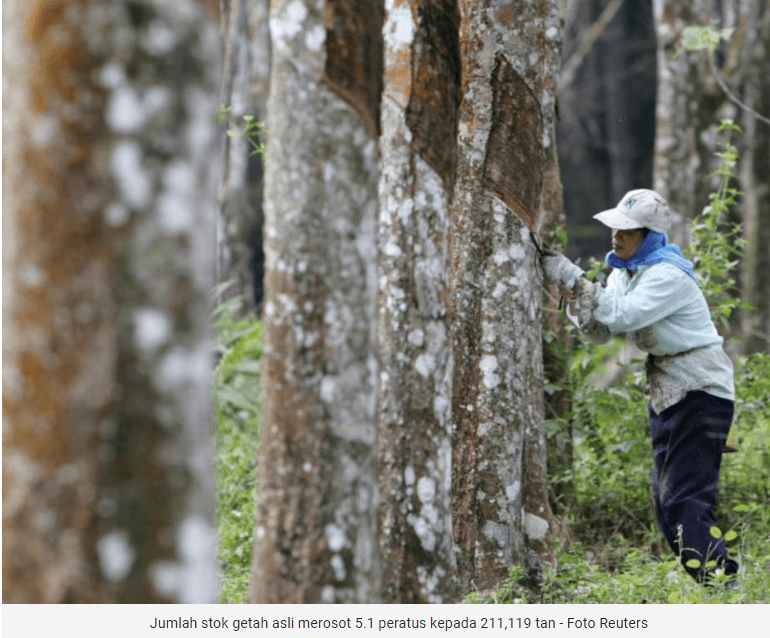
KUALA LUMPUR (Jan 24): Palm oil output in Malaysia, the number two supplier, could rise 5% this year after the government allowed plantations to hire foreign workers, said Joseph Tek, chief executive of the Malaysian Palm Oil Association.
The admission of new workers potentially means that an additional 5.2 million tonnes of fresh fruit bunches can be harvested, the top growers’ group said in a statement. That translates into 1 million tonnes of crude palm oil, Tek said.
The extra tonnenage would also generate revenue of close to RM4 billion, bringing “significant relief” to the industry, which is grappling with a substantial shortage of 40,000 workers, the group said. The news pressured benchmark palm oil futures in Kuala Lumpur trading.
The government has been trying to reduce reliance on cheap foreign labor across many industries including manufacturing, construction and plantations, and seeks to regulate admission processes to prevent any issues like forced labor, worker exploitation and human trafficking.
In March last year, the country temporarily suspended the application and approval process for foreign workers under a quota system in order to speed up the entry of workers already approved.
Chronic shortage
Malaysia’s palm oil industry is heavily reliant on foreign labour. A chronic shortage of workers resulted in revenue losses estimated at RM20 billion in 2022 and continued to curb growth in output last year.
Palm oil production in Malaysia totaled 18.55 million tonnes in 2023, and earlier this month the Palm Oil Board, which regulates the industry, predicted output of 18.75 million tonnes for this year. That’s less than half the supply from top producer Indonesia, where output has expanded steadily in recent years.
The association represents over 40% of the oil palm area in Malaysia. Members include some of the top plantation companies such as Sime Darby Plantation Bhd, Kuala Lumpur Kepong Bhd, IOI Corp and FGV Holdings Bhd.
Palm oil futures in Kuala Lumpur climbed as much as 0.9% to RM3,985 a tonne on Wednesday, before paring gains to RM3,955 by midday.
The higher output estimate is capping the rally, said Gnanasekar Thiagarajan, head of trading and hedging strategies at Kaleesuwari Intercontinental. The move to allow more foreign workers “adds to supply woes,” he said.
https://theedgemalaysia.com/node/698490
Sumber : The Edge Malaysia