-
Official Websites of
-
MINISTRY OF
PLANTATION AND COMMODITIES -
No. 15, Level 5-13, Persiaran Perdana, Presint 2, 62654 Wilayah Persekutuan Putrajaya


BERITA SAWIT 2024
- Details
- Hits: 340
Malaysia’s palm oil industry is hoping to get a fresh kick from China’s insatiable appetite for mala hotpot as the world’s second-largest producer of the vegetable oil looks to diversify markets for a sector that faces possible sanctions under deforestation rules imposed by the European Union.
On Wednesday, during Chinese Premier Li Qiang’s first official visit to Malaysia to coincide with the 50th anniversary of diplomatic ties, the two countries renewed a five-year economic and trade pact and expanded cooperation across sectors such as green technology and cross-border crime.
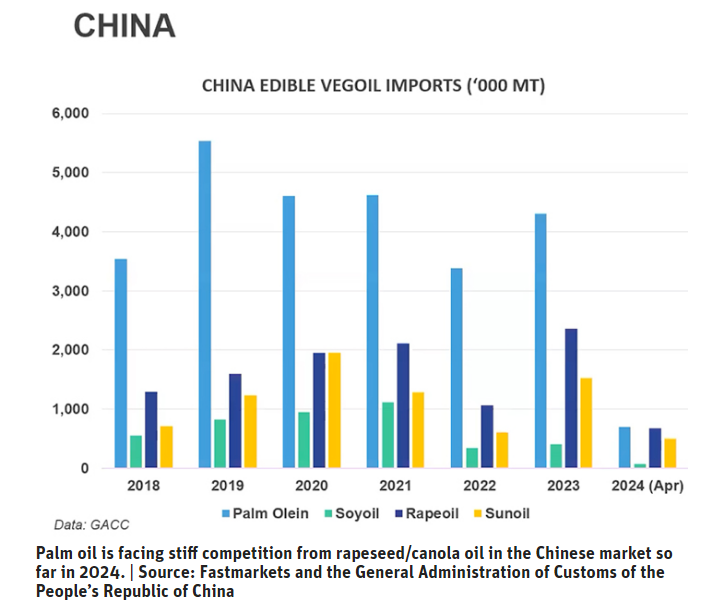
China is the second-largest importer of Malaysian palm oil, buying last year nearly 3.1 million tonnes of the controversial commodity that environmental groups have said is responsible for mass deforestation and the destruction of the habitat of critically endangered animals such as the orangutan.
But Malaysia thinks there is plenty more room to grow demand in China, which counted nearly 400,000 restaurants across the country that specialise in Sichuan hotpot in 2021, according to the official data.
The government has cooked up a plan to convince the hundreds of thousands of hotpot operators in China to consider palm oil as an alternative base for the tongue-numbing broth, which is often made from beef tallow and can be so spicy that some versions purportedly cause hallucinations.
“Palm oil is not only abundant but also versatile and stable under high heat, which is ideal for the intense cooking process of mala hotpot,” Malaysia’s Plantation and Commodities Deputy Minister Chan Foong Hin told This Week in Asia.
Chan said the government had already set up partnerships with Chinese enterprises in a bid to embed palm oil as deeply as possible in the hotpot industry supply chain, while actively promoting the benefits of using palm oil in China’s culinary traditions.
“The feedback so far has been very positive, indicating a strong potential for growth in this market segment,” he said.
Malaysia’s hotpot push began last year, when domestic restaurant operators and commercial producers of the mala hotpot soup base sought alternative fats to offset a shortage in beef tallow, which is traditionally used due to its flavour and texture.
The shift coincided with complaints filed to the World Trade Organization by Malaysia and Indonesia, the world’s largest producer of palm oil, against the EU’s deforestation regulation that the two nations said placed unfair restrictions on palm oil in favour of vegetable oils grown in Europe.
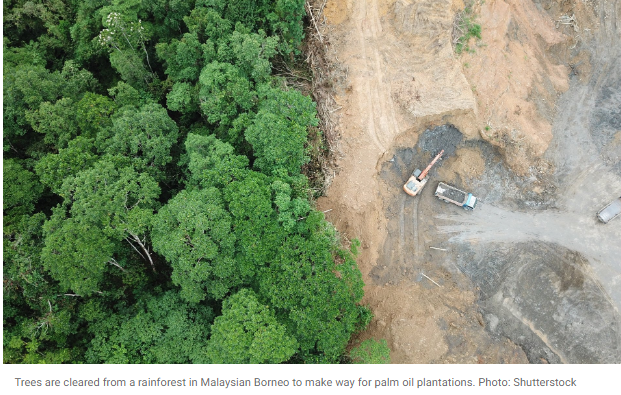
The WTO in March ruled in favour of the EU’s move to exclude palm oil as a renewable source of biofuel by 2030 under its deforestation regulation, which was formally adopted in 2021 to drop imports of crops grown on deforested land or where there is a high risk they would displace food crops.
Once in full effect, the EU’s regulation would ban the import of vegetable oils deemed to have contributed to recent deforestation. Malaysia and Indonesia have said that it places unreasonable requirements on smallholders, who can ill afford to implement technology such as GPS tracing on their produce.
Malaysia has argued that it no longer allows land clearing or deforestation to expand oil palm plantations in the country.
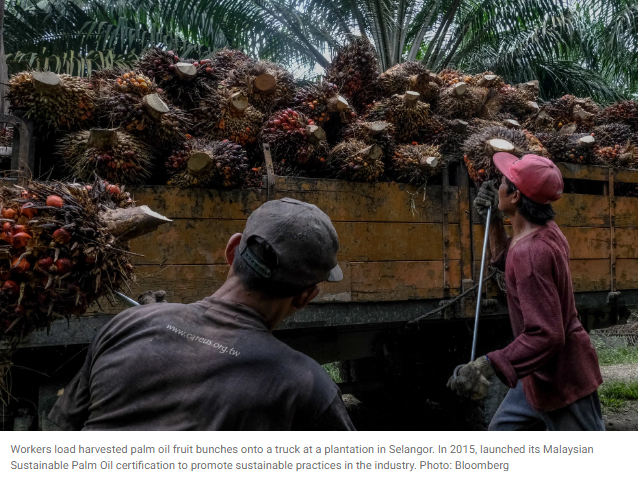
In 2015, it launched its Malaysian Sustainable Palm Oil (MSPO) certification to promote sustainable practices in the industry and counter the deforestation narrative that has been a common thread in diplomatic and public discussions in Europe.
The EU remains a major market for Malaysian palm oil and palm oil products.
The region imported nearly 2.8 million tonnes in 2023, but demand has seen a steady decline as EU member states face sustained public resistance to the ubiquitous oil, used in everything from making lipsticks and soaps to pastries and the popular Nutella spread.
Malaysia was actively promoting the use of MSPO-certified palm oil and palm oil products to China, deputy minister Chan said, adding that the now-mandatory certification for Malaysian-produced palm oil showed “Malaysia’s commitment to sustainable palm oil production”.
“China has shown a positive view of MSPO and is accepting imports of MSPO-certified products. More Chinese companies are expected to import MSPO-certified palm oil products in the future,” he said.
https://www.scmp.com/week-asia/politics/article/3267184/malaysia-banks-chinas-love-mala-hotpot-spice-palm-oil-exports
Sumber : South China Morning Post
- Details
- Hits: 282
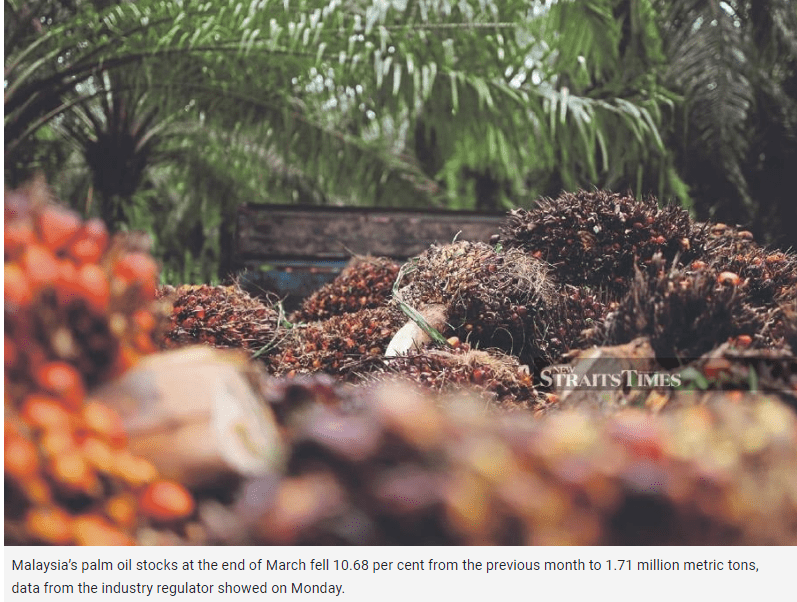
KUALA LUMPUR: Malaysia's palm oil stocks at the end of March fell 10.68 per cent from the previous month to 1.71 million metric tons, data from the industry regulator showed on Monday.
Crude palm oil production gained 10.57 per cent from February to 1.39 million tons, while palm oil exports ticked up 28.61 per cent to 1.32 million tons, said the Malaysian Palm Oil Board (MPOB).
A Reuters survey forecast March inventories at 1.79 million tons, a 6.65 per cent decline from the previous month, with output at 1.38 million tons and exports at 1.23 million tons. - Reuters
https://www.nst.com.my/business/corporate/2024/04/1038010/malaysia-end-march-palm-oil-stocks-fall-1068pc-says-mpob
Sumber : New Straits Times
- Details
- Hits: 607
Petaling Jaya : Malaysia has secured the backing of India, the world’s largest palm oil importer, in combating the anti-palm oil campaign propagated by Western nations.
At a roundtable in New Delhi yesterday attended by plantation and commodities minister Johari Ghani, the Indian Vegetable Oil Producers Association (IVPA) voiced unequivocal support for Malaysia’s stand.
Johari was on a two-day trip to the Indian capital city from July 17 to 18.
IVPA president Sudhakar Desai said the ongoing anti-palm oil campaign poses a threat to the commodity, an essential good for the 1.4 billion consumers in India.
He called for targeted campaigns in response, aimed at shining light on the sustainability and economic benefits of palm oil, to combat concerns of climate change and deforestation.
Another approach, Sudhakar said, would be to work with think tanks and research institutions to highlight unbiased studies about the commodity.
The findings of these studies should then be used as part of marketing and advocacy campaigns to build the trust of consumers in palm oil, the head of the association in India said.
Speaking at the roundtable’s dialogue session, Johari said palm oil was the most efficient edible oil in terms of productivity and land use.
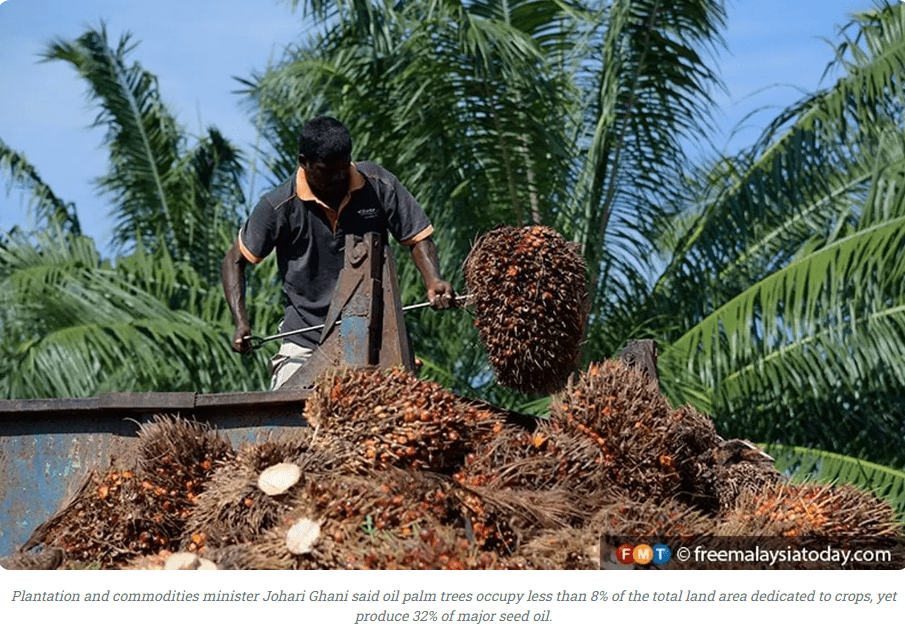
He said oil palm trees occupy less than 8% of the total area of land dedicated to crops, yet produce 32% of major seed oil.
Due to its low cost, high-yielding nature and consistent availability, palm oil boasts the highest yield among vegetable oils, producing 3.3 tonnes per hectare of oil compared to soybean (0.5), sunflower (0.8), and rapeseed (0.8), he said, according to a press release.
Johari said India would continue to be a key trade partner for Malaysia, which remains committed to supplying the South Asian country with high quality and sustainably produced palm oil.
The European Union Deforestation-free Regulation (EUDR) introduced in November 2021 is aimed at limiting deforestation caused by the consumption of agricultural commodities and products around the world.
The EUDR lists palm oil as one of the commodities that drive deforestation and forest degradation through the expansion of agricultural land.
In April, Johari urged the EU to end its arbitrary and unjustifiable discrimination against palm oil
, and to act fairly in enforcing its strict environmental and sustainability laws and targets.
Yesterday, the minister said Malaysia’s palm oil exports to India would continue to rise in line with the growth of India’s middle-class consumer base.
Malaysia’s exports of palm oil and palm oil products to India last year totalled 3.3 million tonnes, valued at US$3 billion (RM14 billion), or 13% of Malaysia’s total palm oil exports.
https://www.freemalaysiatoday.com/category/nation/2024/07/19/malaysia-gets-indias-backing-in-fight-against-anti-palm-oil-campaign/
Sumber : Free Malaysia Today
- Details
- Hits: 472
KUCHING: Malaysia is on the right track to obtain the European Union’s (EU) "green light” in the near term for the recognition of the Malaysian Sustainable Palm Oil (MSPO) certification scheme, says Deputy Prime Minister Datuk Seri Fadillah Yusof.
Fadillah, who is also the Energy Transition and Water Transformation Minister, said the EU leadership is expected to make the announcement by June at the latest.
"We want MSPO to be recognised so that our smallholders are not left out or marginalised following the implementation of the EU Deforestation Regulation (EUDR).
"This is good news. With our MSPO being recognised by the EU, locally-produced commodity products would not be required to be audited by them,” he told reporters after the 2024 annual grant handover ceremony for the Petra Jaya federal constituency’s village development and security committees (JKKKs) here today.
He said this was shared during a brainstorming session with an EU delegation that has been in the state since last Wednesday for the launch of Invest Sarawak and Business Day programme.
In May last year, Fadillah, who was then holding the Plantation and Commodities Minister portfolio, jointly led a mission to Brussels, Belgium, to convey the stance of the Council of Palm Oil Producing Countries (CPOPC) members on the EUDR implementation.
As a CPOPC member, he said, Malaysia is committed to be involved actively through the platform and continue the agenda of countering Western countries’ negative campaigns against palm oil.
At the ceremony on Saturday (Feb 17), Fadillah, who is also the Member of Parliament for Petra Jaya, presented grants totalling RM255,000 to 85 JKKKs under his constituency. - Bernama
https://www.thestar.com.my/news/nation/2024/02/18/malaysia-on-right-track-for-mspo-recognition-from-eu-says-fadillah
Sumber : The Star
- Details
- Hits: 382
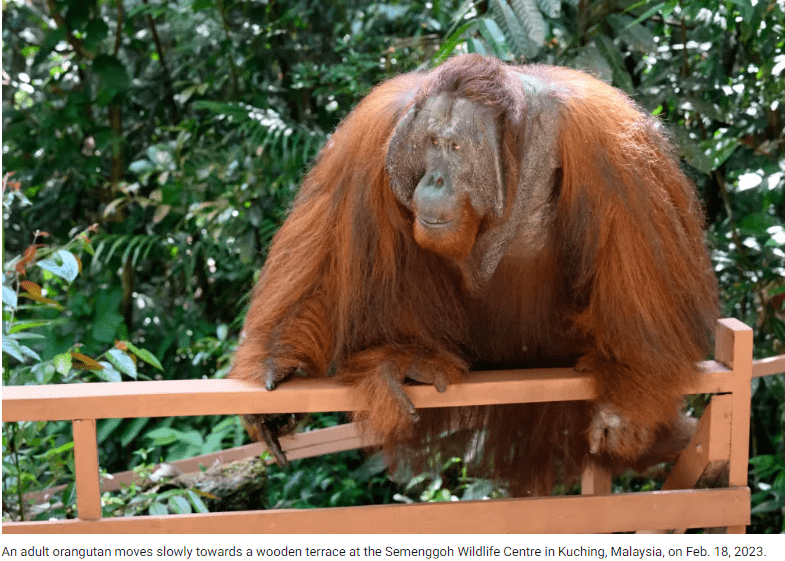
Malaysia plans to gift orangutans to its major buyers of palm oil, a commodity long blamed for destroying habitats of the endangered apes.
The world’s second-biggest palm grower is taking inspiration from China’s “Panda Diplomacy,” and is considering to gift the orange-haired mammals to some of its trading partners, including the European Union, as part of the country’s “strategic diplomatic move.”
“This will be a manifestation of how Malaysia preserves wildlife and ensures sustainability of our forests, especially within the palm oil plantation landscape,” Johari Abdul Ghani, the Southeast Asian nation’s plantations and commodities minister, said in a post on X. The move will prove to the world that Malaysia is committed to biodiversity conservation, he said.
The idea follows accusations and restrictions by some palm oil importers, such as Europe, that its cultivation destroys rainforests, drives endangered animals toward extinction, and is linked to labor abuse. Environmental groups have stepped up scrutiny of the crop, while the EU is introducing rules to stop products that cause deforestation from being sold in shops.
“Malaysia must not take a defensive stance on palm oil,” Johari said. “Instead, we have to show the world that Malaysia is a producer of sustainable palm oil and is committed to safeguard forests as well as environmental sustainability.”
Indonesia and Malaysia, the world’s top palm oil producers that collectively account for about 85% of global output, have pledged to work together to counter “anti-palm oil campaigns” launched by some western countries. Palm oil is a versatile ingredient found in products such as pizza, instant noodles, and shampoo.
Orangutans are found in the rainforests of the Southeast Asian islands of Borneo and Sumatra, according to the World Wildlife Fund. The great apes are critically endangered — with their population estimated at about 120,000 — and threatened by rapid deforestation mainly due to palm oil and other agriculture plantations, the organization said.
https://time.com/6976275/malaysia-orangutan-diplomacy-palm-oil-china-panda/
Sumber : TIME